VERRIN EDITORIAL · VOLUME 01
Privacy Is an Architectural Sequence
Privacy is often described as a boundary condition: a gate, a wall, a hedge or a long drive. In exceptional houses, it is more accurately understood as a sequence. The feeling of protection is built gradually through orientation, compression, filtered views and the management of sound.

WRITTEN FOR VERRIN BY
Elena Voss
Editorial Director
PUBLISHED
7 min read
The most private homes do not hide behind a single gesture. They choreograph distance, sound, threshold and arrival.
Privacy begins before the door
A discreet address is not necessarily an isolated one. Many of the most convincing private residences sit within cities, villages or open landscapes where retreat cannot be achieved by distance alone. Their architects begin by controlling what can be understood from the approach. A turn in a wall, a change in level or a darkened passage can delay comprehension without making arrival theatrical.
That delay matters because privacy is partly psychological. When the entire house is visible from the gate, the visitor forms a complete mental map immediately. When rooms are revealed in fragments, the home retains depth. The strongest sequences are legible enough to feel calm, yet never so explicit that every activity becomes exposed.
Sound is a spatial material
Views tend to dominate conversations about residential privacy, but sound is often the more revealing condition. Service routes, guest rooms, kitchens and outdoor terraces can transmit domestic life across surprising distances. Thick thresholds, planted courts and offset openings are valuable not only because they conceal, but because they absorb and redirect noise.
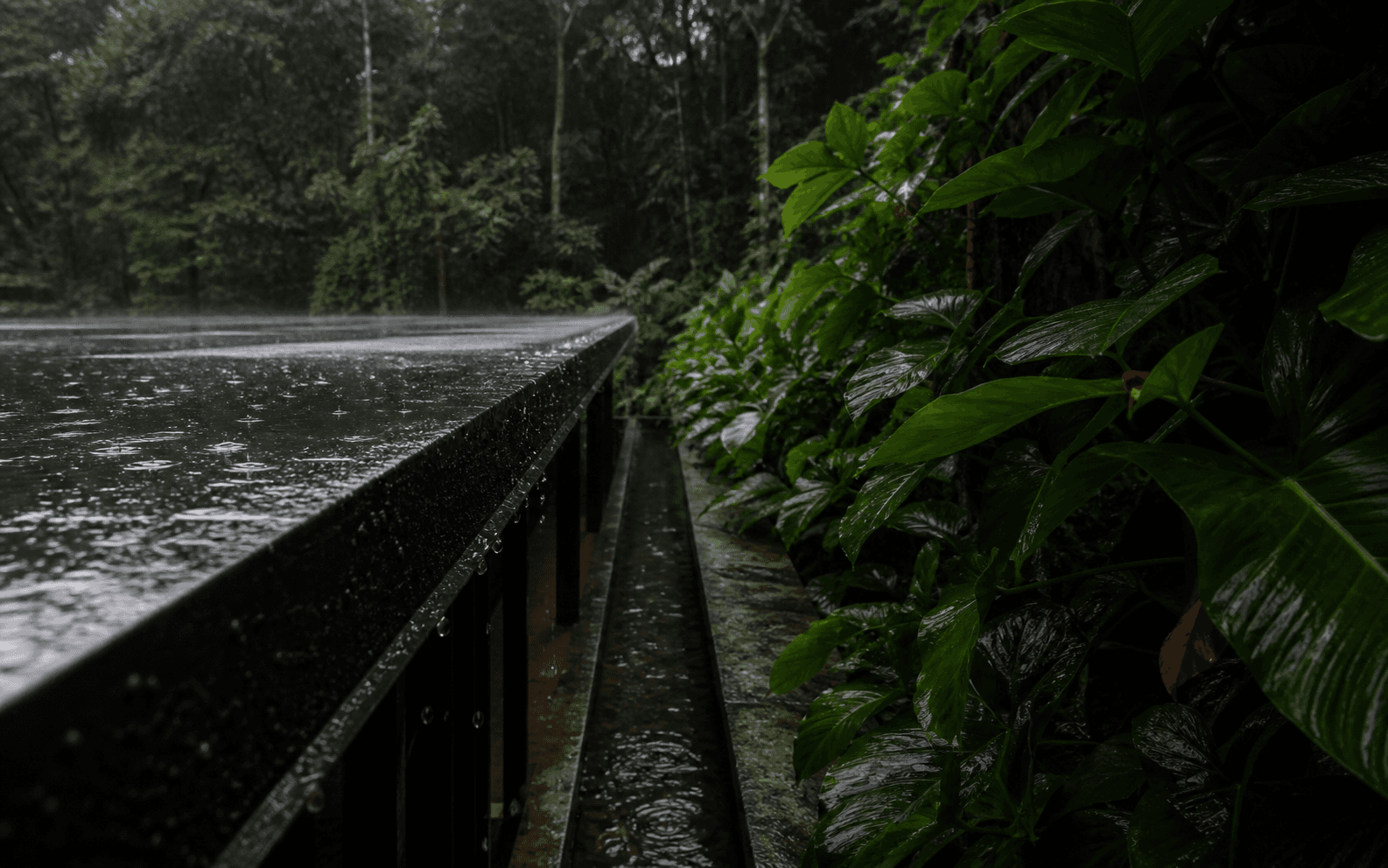
In remote houses, the objective can be the opposite: preserving the sound of weather while removing mechanical distraction. Quiet systems, separated plant rooms and carefully detailed glazing allow rain, wind or water to remain present without making the interior feel exposed. This is privacy as control over attention rather than simple silence.
A view can remain selective
Full-height glass does not automatically produce openness, and small windows do not guarantee retreat. Orientation, reflection and depth of reveal determine whether glazing feels generous or vulnerable. A broad window facing a dark landscape can become a mirror at night; a narrow opening aligned with a distant horizon can feel remarkably expansive while protecting the room around it.
The most considered homes work differently across the day. Screens, curtains and landscape are treated as part of the architecture, not as later corrections. Occupants can choose how much of the outside world enters the room and how much of the room is offered back.
Discretion without defensiveness
Security is necessary, but architecture suffers when every protective measure is expressed as resistance. Layered access, clear sight lines for staff and technology embedded within ordinary details can provide assurance without turning the house into an object of anxiety.
Ultimately, privacy is successful when it is felt rather than announced. The resident moves naturally from public to shared to intimate space, and the house supports that transition without instruction. The result is not secrecy. It is the freedom to decide where attention belongs.

Elena Voss
Editorial Director
CONTINUE READING