VERRIN EDITORIAL · VOLUME 01
Building With Rain, Not Against It
Rain is commonly treated as a technical problem to remove as quickly as possible. In tropical and coastal houses, that approach can miss an opportunity. Water can cool, mark time and connect roof, court and landscape — provided that drainage, maintenance and safety remain exact.
WRITTEN FOR VERRIN BY
Ivo Sato
Environmental Researcher
PUBLISHED
7 min read
In wet climates, water should be visible, directed and valued. The best houses make rainfall part of their architecture without romanticising risk.
Make the path of water legible
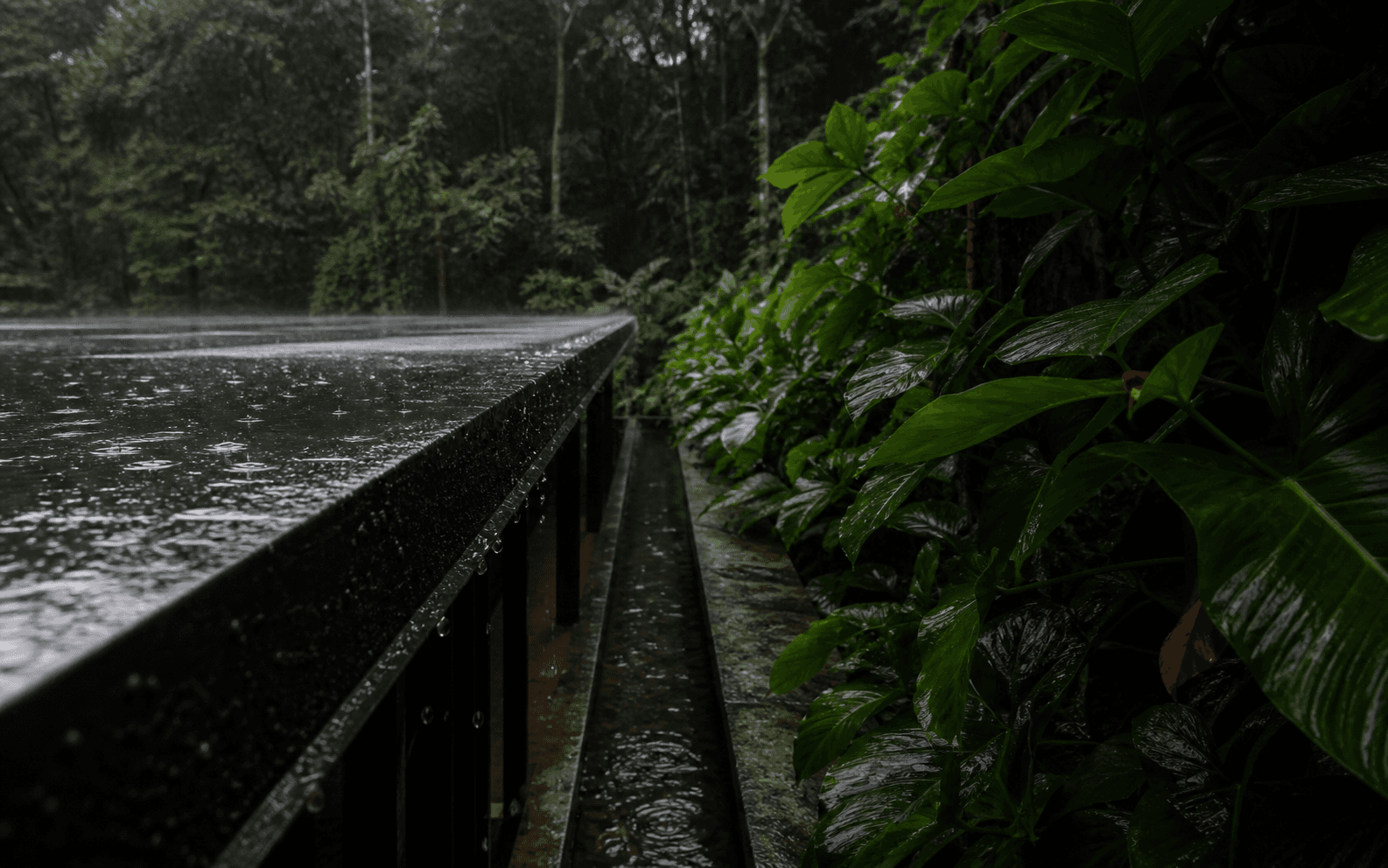
Hidden drainage can produce visually clean roofs, but it also conceals blockages until damage appears. Scuppers, channels and collection courts can remain architectural without becoming decorative. When occupants can see where water moves, maintenance becomes easier and the building communicates how it works.
Legibility does not mean spectacle. A narrow runnel, a protected chain or a darkened stone strip may be enough. The key is that overflow paths are designed with the same care as ordinary flow, particularly as rainfall becomes less predictable.
Shelter should preserve air
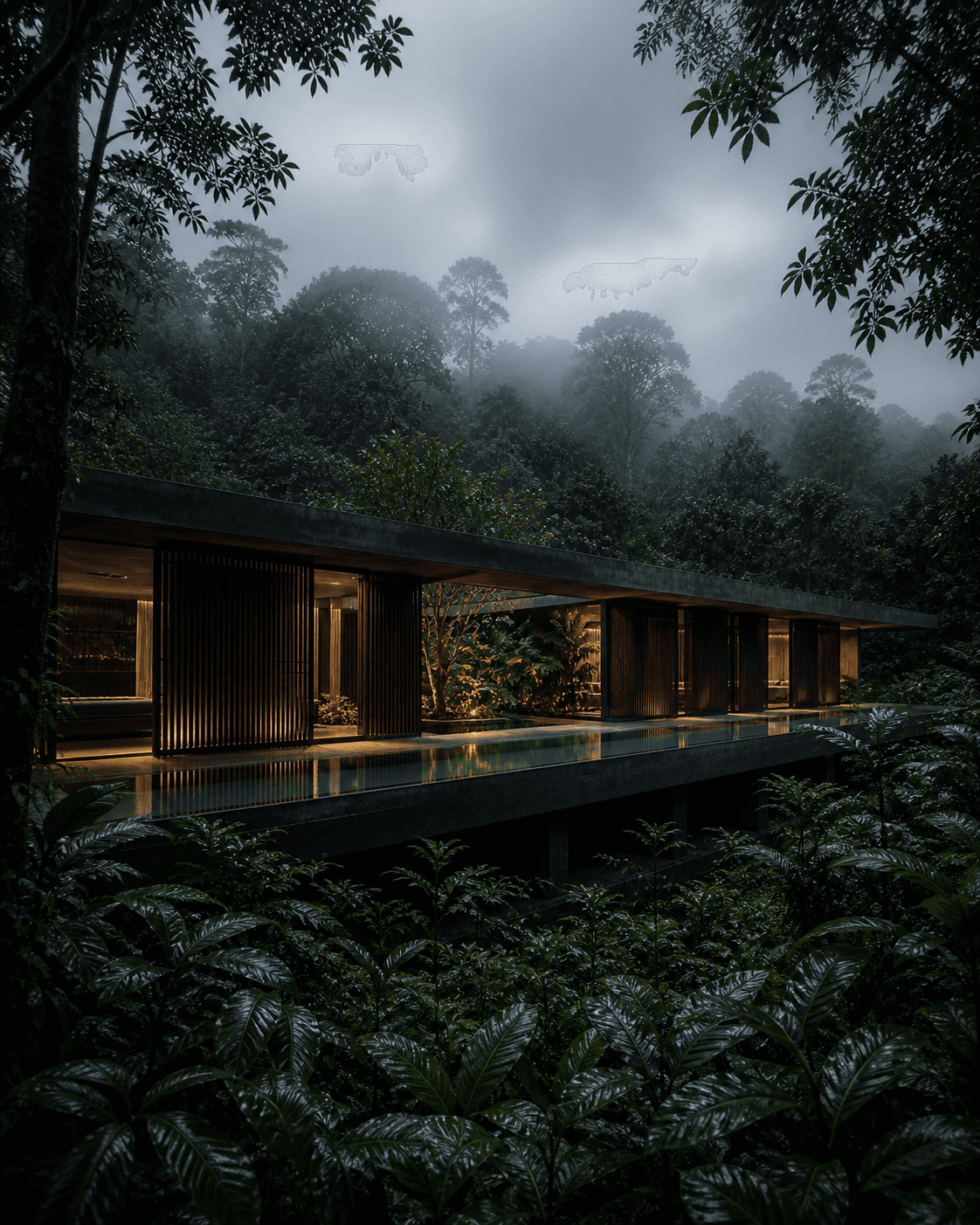
Deep roofs protect openings, terraces and circulation, but excessive enclosure can trap humidity. Cross-ventilation depends on pressure differences, clear air paths and screens that occupants can operate easily. Covered outdoor rooms work best when they remain genuinely open to moving air.
Material selection must acknowledge that some surfaces will stay damp. Dense tropical hardwood, well-detailed concrete and ventilated cavities can perform with modest intervention. Interior finishes that demand permanent mechanical conditioning often fight the climate rather than support it.
Storage follows demand
Rainwater capture is valuable only when storage, filtration and use are calibrated together. Oversized tanks add cost and embodied carbon; undersized systems fail precisely when they are most needed. Irrigation, laundry, cleaning and water features each have different quality requirements and seasonal patterns.
A clear water strategy can reduce dependence on distant supply while making the landscape more resilient. Native planting, shaded soil and controlled runoff are often more effective than simply collecting a larger volume.
Weather can remain present
Comfort does not require the elimination of every sign of rain. The sound of water on a roof, the reflected light of a wet court and the temporary cooling of air can deepen the experience of a house. These qualities are meaningful because the underlying systems are dependable.
Architecture earns the freedom to be atmospheric through technical discipline. When water is understood from roof edge to ground, rain stops being an interruption and becomes part of the daily life of the place.
Ivo Sato
Environmental Researcher
CONTINUE READING


