VERRIN EDITORIAL · VOLUME 01
The Alpine House After Spectacle
The alpine residence has long been asked to perform an image of escape: broad glass, monumental hearths and a commanding view. A quieter model is emerging. It values shelter, seasonal use and the social intelligence of smaller rooms over a single spectacular volume.

WRITTEN FOR VERRIN BY
Mara Sol
Alpine Correspondent
PUBLISHED
6 min read
A new generation of mountain homes is trading oversized gestures for quieter plans, better winter performance and a closer reading of snow.
Snow is not background
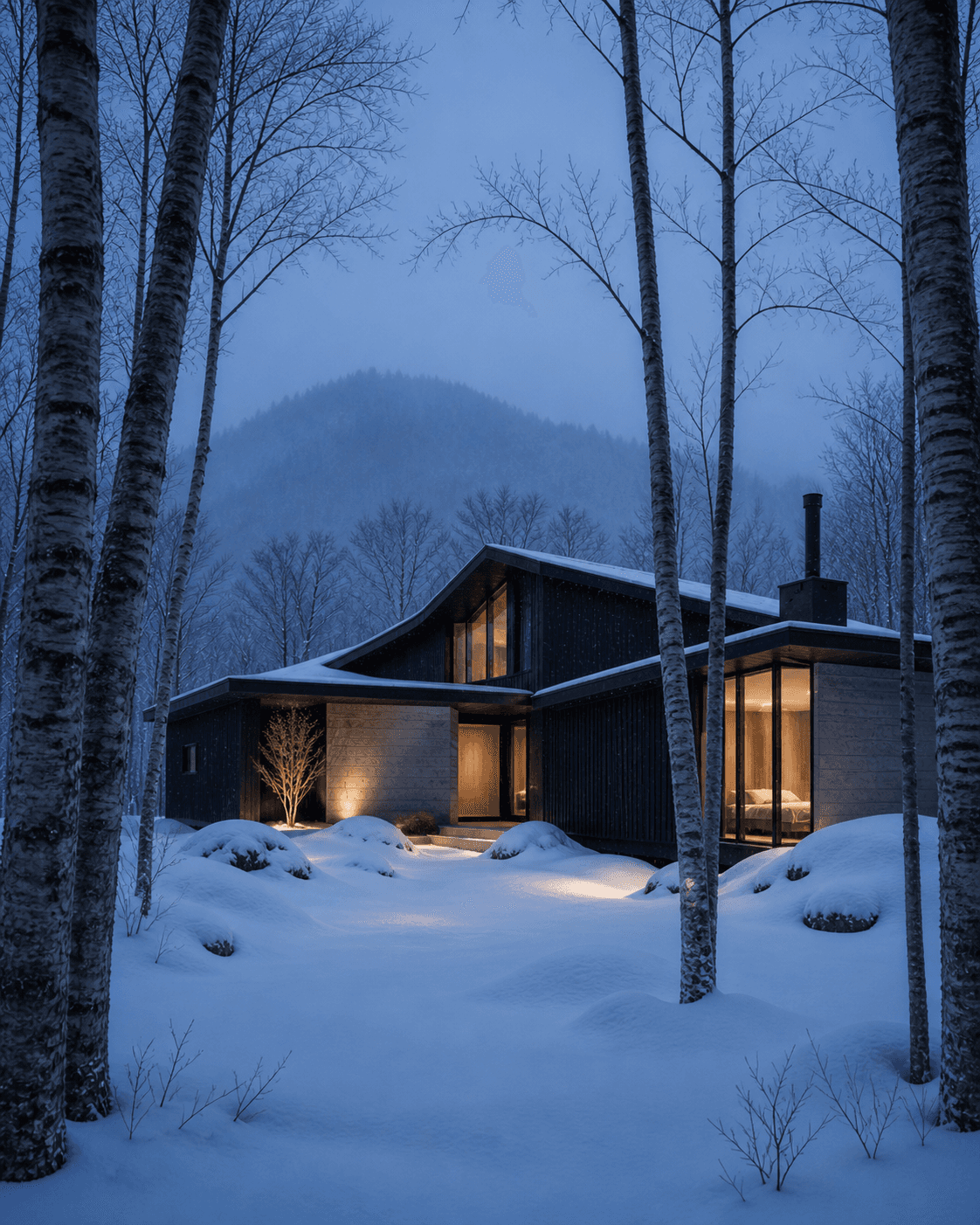
Snow changes access, light, acoustics and the apparent height of a building. Houses designed only from summer surveys can feel entirely different once drifts gather around them. Roof geometry, protected arrival and the location of glazing must be tested against winter conditions rather than treated as later engineering.
The most convincing plans use snow to create privacy and reflected light. Low windows can become luminous when the ground is white; sheltered courts allow children and guests to step outside without confronting wind; darker materials give the building legibility during storms.
Generosity can be distributed
A single enormous living room often photographs well and performs poorly when a house is occupied by different generations. Smaller salons, a library, a dining kitchen and protected transition spaces offer more choices throughout the day. Guests can gather without making every activity public.
This distribution also supports energy performance. Rooms can be conditioned according to use, and the building envelope can remain more compact. Luxury is expressed through acoustic separation, good storage and effortless circulation rather than unused volume.
Winter systems should disappear
Drying rooms, equipment storage, snowmelt and service access are central to daily comfort, yet they are frequently pushed into residual spaces. When planned properly, they simplify arrival and protect the more refined interiors from moisture and clutter.
The same principle applies to plant. Quiet ventilation, heat recovery and accessible maintenance routes allow a winter house to perform without making technology the dominant experience. Reliability is most luxurious when it is almost unnoticed.
The view is one room among many
Mountain panoramas remain powerful, but constant exposure can flatten their effect. Side light, framed trees and glimpses across a court create a richer daily relationship with place. A carefully positioned seat may offer more than an uninterrupted glass wall.
The alpine house after spectacle is not austere for its own sake. It is attentive: to weather, to occupation and to the distinction between a memorable arrival and a place one can inhabit for an entire season.
Mara Sol
Alpine Correspondent
CONTINUE READING


