VERRIN EDITORIAL · VOLUME 01
Collecting Space, Not Objects
Collectors often begin by asking where works will be displayed. The more useful question is how art and daily life should meet. A residence can protect important objects without turning every wall into exhibition surface or every room into a neutral container.
WRITTEN FOR VERRIN BY
Claire Reeve
Art & Interiors Editor
PUBLISHED
8 min read
A home for art does not need to behave like a gallery. Proportion, pause and changing daylight can give a collection room to remain personal.
Not every wall needs a work
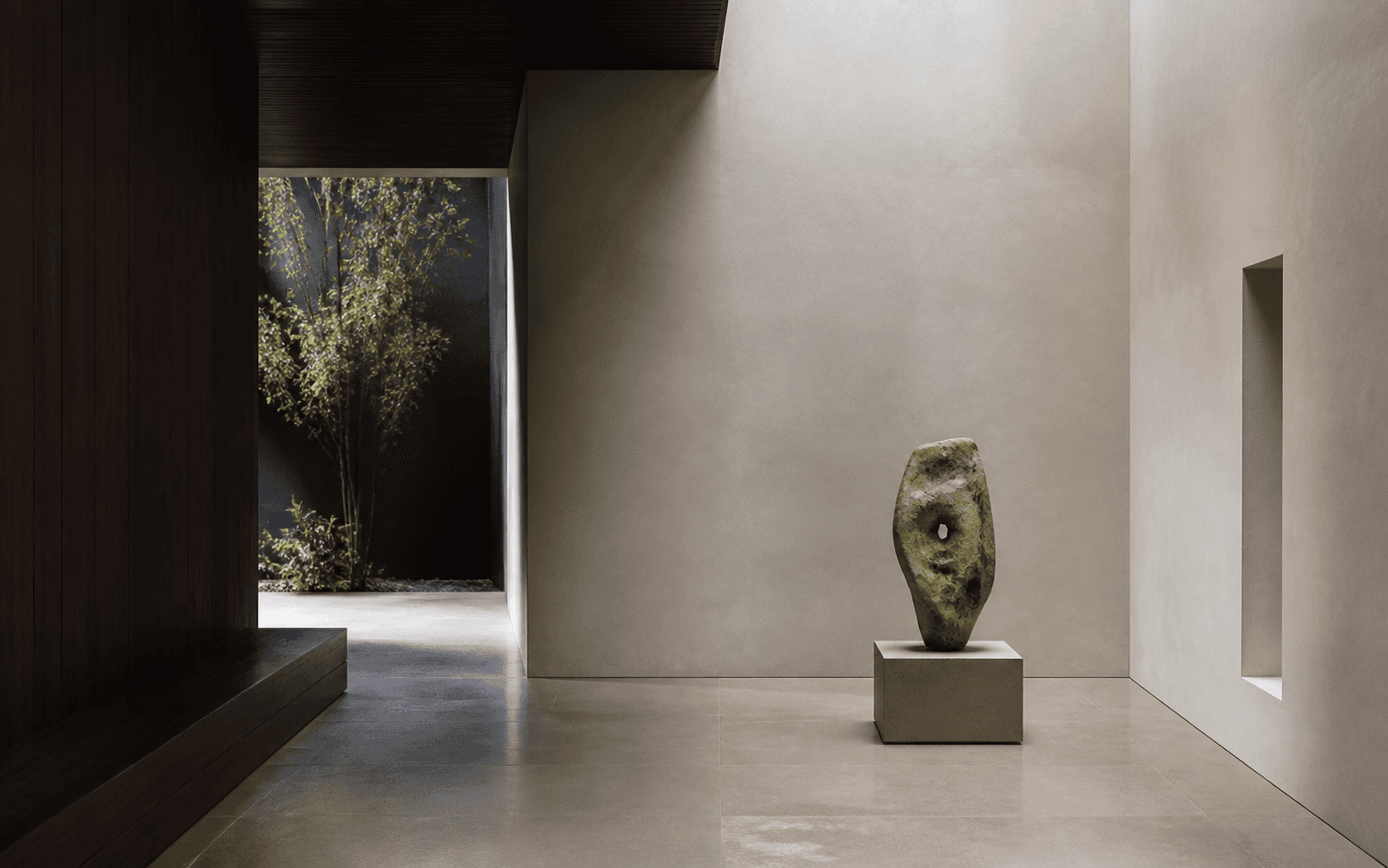
Visual silence is part of a collection. Empty wall, shadow and an unoccupied threshold allow the eye to reset before encountering another object. When works compete continuously, even important pieces lose their distinct scale and atmosphere.
Architects can support this rhythm through proportion rather than decorative emphasis. A deep reveal, a short passage or a change in ceiling height creates a pause without announcing itself as a display strategy.
Domestic light is allowed to change
Museums pursue consistency because public access and conservation demand it. A private house can be more nuanced. Daylight may move across a room while the most sensitive works remain protected in controlled zones. The collection becomes part of the hours rather than a static installation.
This requires precise assessment of material, glazing and orientation. Works on paper, textiles, photography and stone do not share the same tolerance. Flexible hanging and concealed shading give owners freedom without relying on permanent darkness.
Storage is an active room
A collection is rarely all on view. Well-designed storage allows works to rotate, rest and be studied without complex handling. It should support inventory, safe packing and close inspection, with environmental conditions appropriate to the actual objects rather than a generic specification.
When storage is connected intelligently to service access and display spaces, changes can happen quietly. The house remains lived-in while the collection evolves around it.
Meaning is not the same as decoration
Art acquires a different charge in a home because it sits beside routine. A sculpture may be passed every morning; a small painting may belong to a stair landing rather than a formal salon. These relationships are valuable precisely because they are personal and occasionally imperfect.
The strongest residential collections therefore resist a single curatorial gesture. They leave room for inheritance, discovery and change. The architecture provides conditions for attention, then allows the objects and their owners to write the rest.

Claire Reeve
Art & Interiors Editor
CONTINUE READING


